
Coffee County Arrest Records and Court Charges
Arrest records begin with law enforcement. In Coffee County, the Sheriff's Office and County Jail are located at 1133 E. McKinnon Street in New Brockton. The Sheriff's Office administrative phone is (334) 894-5535, and the County Jail phone is (334) 894-6200. Research did not locate an official Coffee County web jail roster on the sheriff or county pages reviewed. The Sheriff's Office promotes the official Coffee County Sheriff app, and the app-store descriptions say the app supports communication with residents, reporting crimes, submitting tips, and receiving public-safety news and information, but the public app descriptions do not confirm a web jail roster or app-only inmate lookup.
Court charge records begin when an alleged offense is entered into the court path. A charge record is narrower than a full criminal case file. It identifies the offense or statute alleged after arrest or citation, the originating agency, the case or warrant number, bond condition, and whether the charge remains pending, dismissed, no-billed, nolle prossed, or disposed. In Coffee County, charge information may appear in sheriff or jail booking records, District Criminal court entries, Alacourt case reports, traffic citations, or Enterprise Municipal Court ticket records. For the complete case outcome, use criminal court records; for custody status, use inmate records; for the broader case universe, use court records.
The Coffee County Sheriff's Office standalone site is one of the assigned sources for arrest and charge records.
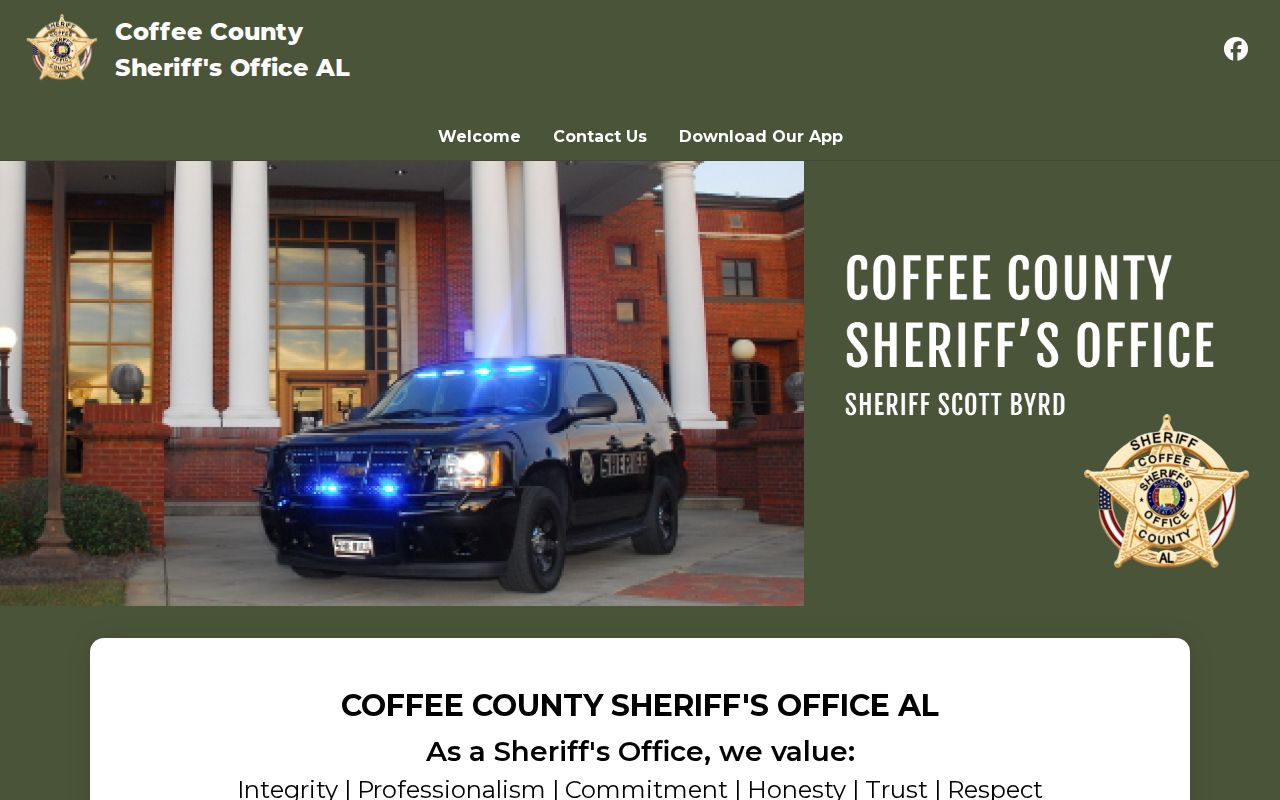
The sheriff source is the correct local starting point for arrest, custody, tips, and law-enforcement communication questions that are not yet clear from a court case record.
How to Find Coffee County Arrest Records and Charges
Begin with the stage of the matter. If the question is whether someone is currently held after an arrest, call the Coffee County Jail at (334) 894-6200 or Sheriff Scott Byrd's Sheriff's Office at (334) 894-5535, use the official sheriff site at coffeeso.us, and check the official Coffee County Sheriff app for public-safety communication features. A public-records request to the Sheriff's Office or County Jail is the fallback for nonconfidential booking or custody records when no web lookup exists. If the question is what charges were filed in court, use Alacourt ACCESS / Just One Look for District and Circuit criminal case reports or contact Coffee County Circuit Clerk Amy L. Reeves's office through coffee.alacourt.gov, Enterprise at (334) 347-2519, or Elba at (334) 897-2954. If the matter is an Enterprise municipal ticket or ordinance case, use the Enterprise Municipal Court channel.
- Identify whether the record needed is jail custody, sheriff arrest information, a court charge, an Enterprise municipal citation, a state traffic citation, or a full criminal case file.
- For court charges after arrest in District or Circuit Court, use Alacourt ACCESS by defendant name or case number, or contact the Circuit Clerk for help locating the case.
- Open the case report and read the charge list, court division, case status, docket actions, bond or warrant entries, and disposition if available.
- For custody and booking questions, contact the Sheriff's Office or County Jail because research did not confirm an official web jail roster on reviewed pages.
- For prosecution, diversion, or driving-school questions connected to state charges or traffic matters, contact the District Attorney's Office when the Coffee County Traffic Court page directs that route.
The Coffee County Sheriff's Office county page is also assigned to this page in the manifest.
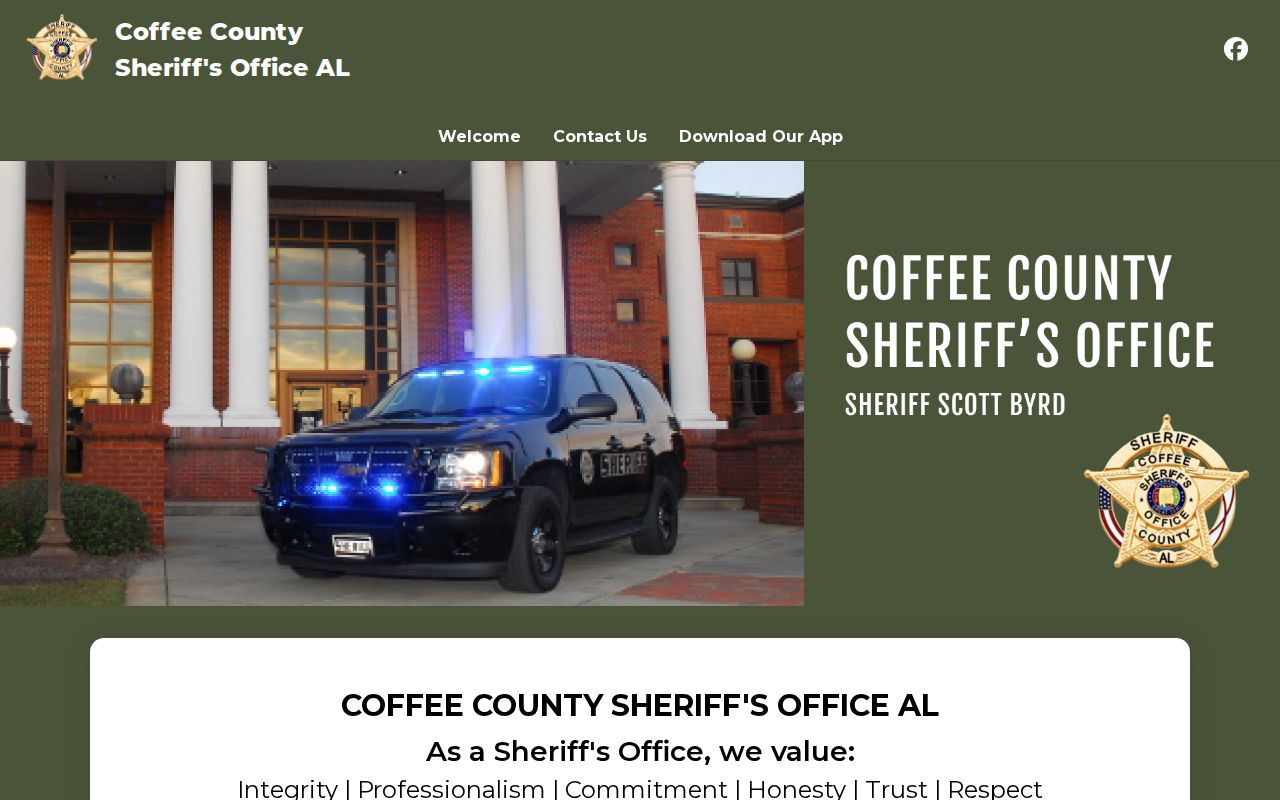
That county page confirms the sheriff office address, phone, administrative hours, values statement, and app link used for the arrest-record access path.
How Charges Get Filed After an Arrest: Complaint, Information, and Indictment
After an arrest or citation, the court charge record begins when the allegation appears in a filing or case entry. Coffee County District Criminal handles misdemeanor cases, worthless checks, conservation tickets, revenue commission tickets, ABC violations, and the beginning stage of felony cases. Felonies begin there until presented to and disposed of by a grand jury. If the grand jury indicts, Circuit Court handles the indicted felony prosecution. If the grand jury returns no bill, the case record may show that the felony did not move forward by indictment.
| Complaint or Citation | Information / Prosecutor Filing | Indictment | |
|---|---|---|---|
| Filed By | Officer, agency, or complainant route depending on the matter. | Prosecutor route where applicable to the charge and court process. | Grand jury. |
| Common For | Misdemeanors, traffic citations, municipal citations, and initial criminal filings. | Prosecution-stage filings where Alabama procedure allows the route. | Felonies after grand-jury action. |
| Coffee County Court Path | District Criminal, Traffic Court, or Enterprise Municipal Court depending on source. | District or Circuit Court depending on charge stage. | Circuit Court felony prosecution after indictment. |
| What It Starts or Advances | The initial case record or citation record. | The prosecution's formal charge position. | The Circuit Court felony case after grand-jury action. |
The Coffee County response agencies page is another assigned source for arrest and charge records.
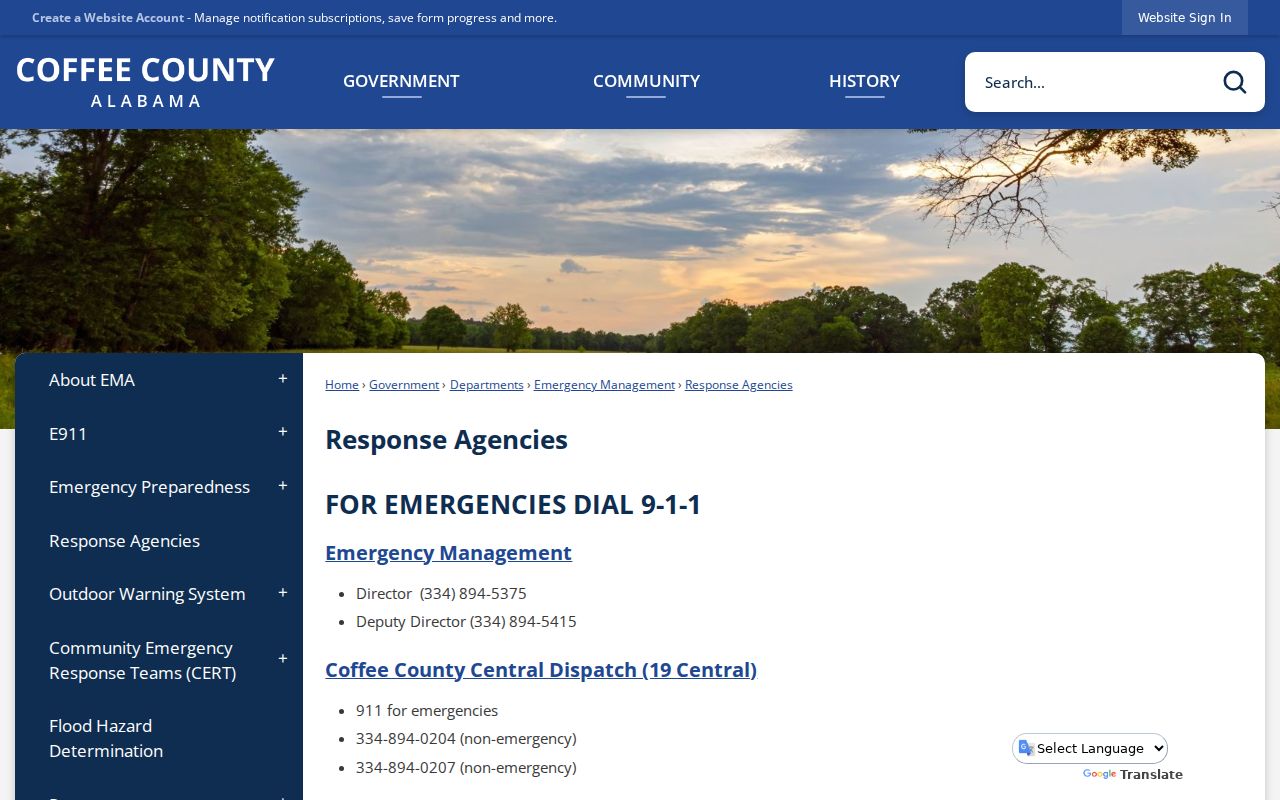
Response-agency context matters because the originating agency can affect where an initial arrest, citation, or charge information trail begins.
Charge Status and What It Means
Charges can change as a Coffee County criminal case moves. A charge can be pending while the court awaits arraignment, hearing, plea, trial, or other action. It can be amended or reduced if the prosecution changes the allegation. It can be dismissed by court action, no-billed by a grand jury, nolle prossed when prosecution does not proceed, or disposed after plea, verdict, or other final action. A single arrest can produce more than one charge, and each charge can have a different status.
| Status | What It Means |
|---|---|
| Pending | The charge has not reached final disposition, or the docket still shows future settings, motions, plea activity, or trial activity. |
| Amended / Reduced | The original allegation has changed, often to a different offense description or severity level, and the docket should be read for the current charge. |
| Dismissed | The charge ended without conviction on that charge, subject to the exact court order and any other charges in the same case. |
| No Bill | The grand jury did not indict the felony charge presented to it. |
| Nolle Prosequi | The prosecution did not proceed on that charge, often shown as nolle prossed in case records. |
| Disposed | The charge has an outcome, which must be read with the plea, verdict, dismissal, sentence, and cost entries. |
Charges vs. Convictions
Being charged after an arrest is not the same as being convicted. A charge is an allegation that appears in a jail, citation, warrant, District Criminal, Circuit Court, Alacourt, traffic, or municipal record. A conviction requires a qualifying court outcome, such as a guilty plea or verdict. Coffee County records may show dismissed charges, no-billed felony matters, nolle prossed charges, amended charges, or disposed charges that should not be described as convictions without confirming the actual disposition.
| Charge | Conviction | |
|---|---|---|
| Stage | Accusation after arrest, citation, complaint, warrant, or indictment. | Final court outcome based on plea, verdict, or qualifying disposition. |
| Proof Level | May begin with probable cause or grand-jury action. | Requires court result supporting guilt and sentence. |
| Public Record | Often appears in court records unless sealed, juvenile, expunged, or otherwise restricted. | Often appears in court records unless sealed, expunged, or restricted. |
| Reader Risk | Can be mistaken for guilt if the disposition is ignored. | Still requires checking sentence, appeal, expungement, or later modification. |
Sealed vs. Expunged Records
Alabama law treats some arrest and charge records as restricted. Juvenile records and law-enforcement records involving children are confidential except as permitted by statute. Enterprise Municipal Court's instructions say defendants under 21 may petition for Youthful Offender status, and if granted, the case is confidential and sealed by the court. ALEA states that Alabama courts grant expungements under Code of Alabama Title 15, Chapter 27, and that ALEA does not grant expungements or give legal advice.
| Sealed | Expunged | |
|---|---|---|
| Visibility | Hidden from general public inspection by law or court order. | Removed from normal public access after a qualifying Alabama court order. |
| Common Coffee County Context | Juvenile matters, Youthful Offender cases, protected identifiers, and court-sealed records. | Eligible criminal charges where the person petitions in the court where the charge was filed. |
| Agency Role | The clerk or agency follows confidentiality law and court orders. | The court grants the order; ALEA states it does not grant expungements. |
| Eligibility | Depends on the record type, statute, and order. | Depends on the charge, disposition, statutory requirements, petition, service, objections, and court ruling. |
Charge Codes and Severity Levels
Coffee County charge records should be read with the statute, offense description, court, and status. District Criminal handles misdemeanors and early felony matters. Felonies begin in District Criminal until presented to the grand jury, then Circuit Court handles indicted felony prosecutions. Enterprise Municipal Court handles city ordinance and traffic matters. State traffic records can involve the Coffee County Traffic Court page, Alabama Traffic Service Center, Online Traffic Resolution, and AlaPay. One arrest can produce multiple charges, and each charge may have separate docket activity, status, bond condition, disposition, cost, and sentence entries.
Because the research did not locate an official Coffee County public sample charge listing, do not assume every record shows a mugshot, booking number, bond amount, arresting officer, address, pod, or jail housing field. The reliable documented fields are court case and report concepts: case number, court or division, parties, filing or citation date, service or citation method, court setting, case status, docket actions, financial fields, images or attachments, and redactions for protected information.
Statewide Charge and Criminal History Lookups
Statewide trial-court charge information for Coffee County District and Circuit matters is searched through Alacourt ACCESS when the record is available there. Alacourt lists criminal records and state traffic records among the available categories and describes name and case-number search routes. For state traffic tickets and criminal fines, AlaPay is a documented payment channel, and the Alabama Traffic Service Center provides traffic resolution options. For criminal-record expungement, ALEA's page points users back to Alabama courts because courts grant expungements under Title 15, Chapter 27.
The Coffee County Sheriff Android app page is assigned to this arrest and charge page.
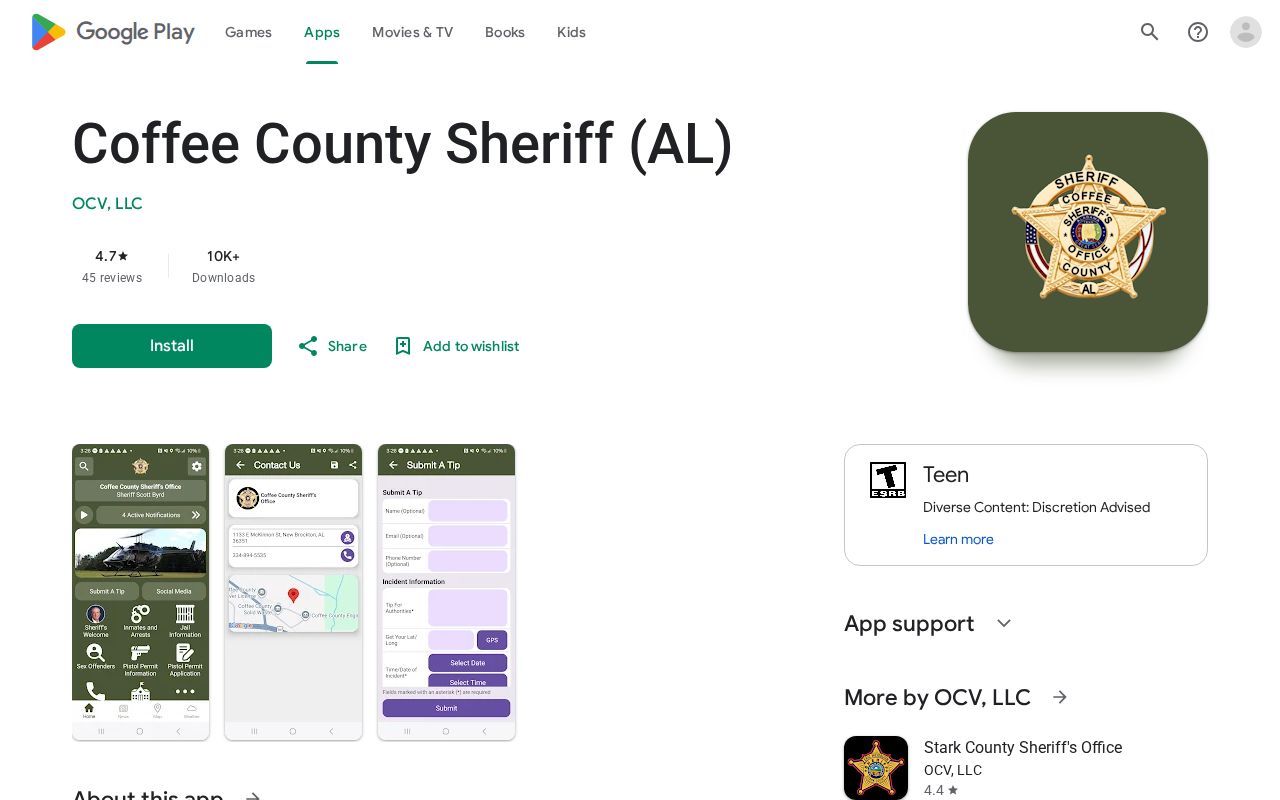
The app-store description supports mentioning reporting crimes, submitting tips, interactive features, and public-safety news, but it does not confirm an app-only jail roster or warrant search.
Background Check Considerations
Arrest records and charge records are not the same as formal background checks. An arrest can occur without a conviction. A charge can be dismissed, amended, no-billed, or nolle prossed. A court record can be sealed or expunged. A jail custody record can change quickly. Employment, tenant, credit, insurance, and other regulated decisions require proper legal compliance and should not rely on informal court or sheriff lookups. Certified dispositions should be requested from the Circuit Clerk when a court outcome must be verified.
Important: Coffee County Court Records is not a consumer reporting agency and cannot be used for FCRA-regulated screening decisions.
Restricted Charge Records in Coffee County
Restricted charge records include juvenile charges, Youthful Offender matters, sealed records, expunged charges, protected personal identifiers, confidential victim-safety information, and ongoing matters withheld by law or court order. Public copies should redact Social Security numbers, financial account numbers, minor identifiers, protected birth dates where applicable, medical information, and other confidential content. If a charge has been expunged, ordinary public access should be limited according to the court order and Alabama statute, though the process does not mean every government system changes instantly.
The Coffee County Sheriff iOS app page is the final assigned image source for this page.
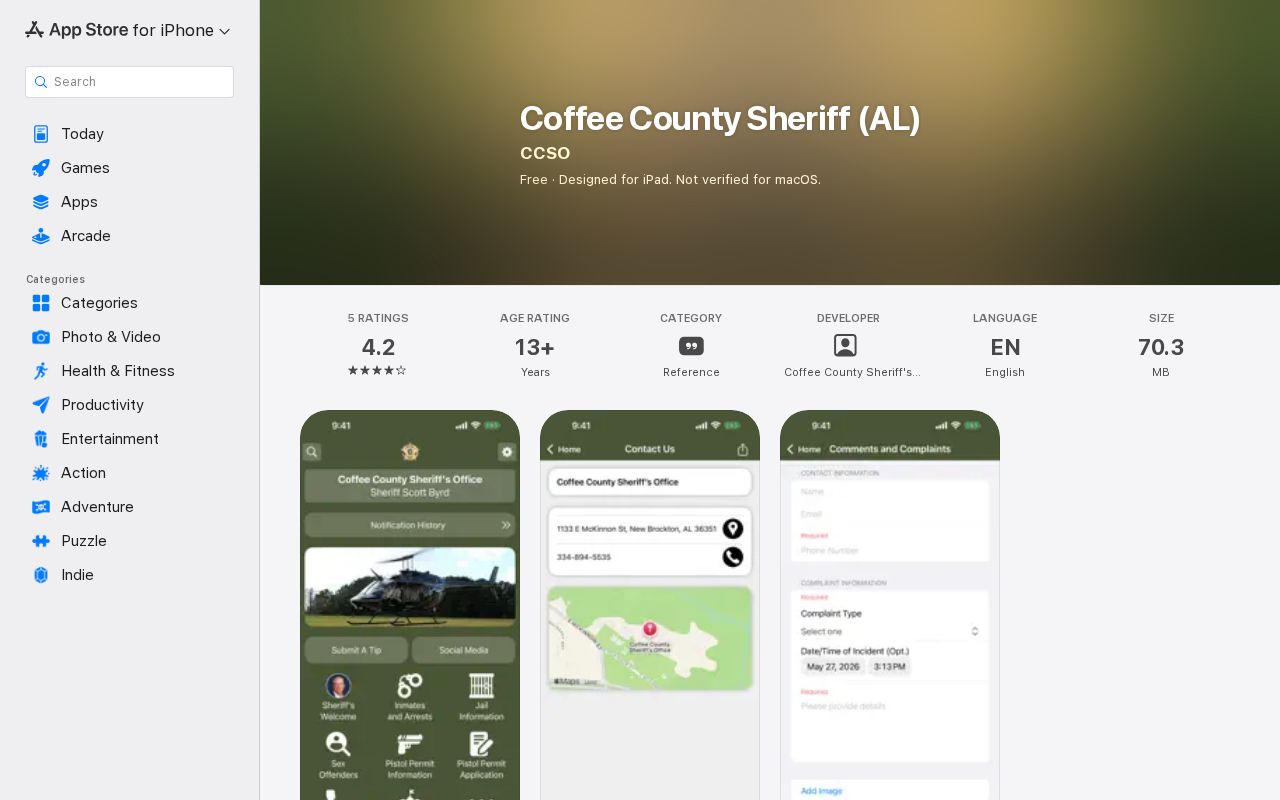
The iOS listing reinforces that the sheriff app is an official public-safety communication tool, while the court charge record itself remains with the court and clerk once charges are filed.